Preparation and communications
To make sure that your health and care area is ready for winter you should have the correct products, procedures and communications in place to stop infections spreading.
Ensure ordering of supplies takes into account potential increase in product demand over winter period as well as seasonal holiday period and closures.
At all times Standard Infection Control Precautions (SICPs) should be followed. SICPs are the basic infection prevention and control measures necessary to reduce the risk of transmission of infectious agents from both recognised and unrecognised sources of infection.
SICPs may be not be enough to prevent cross-transmission of specific infections so you might also need to use additional precautions known as Transmission Based Precautions (TBPs) when caring for patients with a known or suspected infection or colonisation.
Further information on SICPs and TBPs can be found in the NIPCM and CHIPCM.
Make sure that you have the contact details for your local infection prevention and control (IPC) team and NHS board health protection (HPT) team so you can easily get advice and support on infection control and outbreak management during the winter season.
Communications
- Ensure key messages around respiratory and cough hygiene, and norovirus are effectively communicated to staff, service users and the public.
- Ensure that all national and local winter planning communications are available and circulated to staff.
- Provide appropriate communications on IPC and winter planning in in the care area. For example posters and signage in wards and staff kitchen areas promoting hand hygiene and respiratory and cough hygiene.
- Hand hygiene posters - Appendix 1 - How to hand wash and Appendix 2 - How to hand rub.
- Respiratory infections - key steps to stop the spread posters
- Norovirus - key steps to stop the spread posters
- Use infection alert posters to provide information on precautions to be taken when entering an area or visiting a service user.
- Have a supply of HAI and disease specific information leaflets to give to service users and visitors.
- Work with local communications team or staff to issue winter planning communications based on national messaging. This can include social media, websites, staff newsletters, infographics, posters, email signatures, videos and animations.
- Winter Preparedness Graphics used in this page
- Promote seasonal vaccinations for flu and COVID-19 to eligible groups using a range of communications materials, messaging and assets and NHS Inform.
- Winter programme 2025 - seasonal flu and COVID-19 vaccination (Scottish Government)
- Flu vaccination resources (Public Health Scotland)
- COVID-19 vaccination resources (Public Health Scotland)
- Health and social care workers - vaccination posters (Public Health Scotland)
- Winter vaccines campaign assets (Public Health Scotland)
- Remind staff:
- not to come into work if unwell and to use NHS Inform for further information on norovirus or respiratory infections
- not to attend work until 48 hours after their last symptom of diarrhoea and/or sickness
- about their eligibility for seasonal vaccinations
- to access training to ensure their IPC knowledge is up to date for example from NHS Education Scotland
- Remind visitors that they shouldn't visit if they:
- are feeling unwell
- have symptoms of a respiratory infection
- are not yet 48 hours symptom free of sickness and/or diarrhoea
- Direct the public to NHS Inform for further information on norovirus or respiratory infections.
Assessment of infection risk
- Infections can spread easily in busy areas so try to ensure that shared areas, for example waiting areas, are not overcrowded.
- Assess service users for infection risk on arrival to the care area (if possible, before transferring from another care area) and review throughout their stay.
- Follow your local risk assessment and admission screening policy.
- Use the Respiratory Symptom Screening Questions: Aide for Health and Social Care Settings.
- Apply hierarchy of controls to ensure staff and patient safety.
- Service users who present a particular cross-infection risk, for example with symptoms such as diarrhoea, sickness, fever or respiratory symptoms, should be isolated on arrival with appropriate clinical samples and screening undertaken as per national protocols to establish the causative pathogen.
- Use transmission based precautions as described in the NIPCM or CHIPCM.
- Use Appendix 11 for patient placement, PPE and RPE for specific infections.
- Use the A-Z of pathogens for more detailed information on specific pathogens and their notifiable status.
- In care homes use the Respiratory and Gastrointestinal resources and checklists.
- Ensure staff have access to appropriate training on patient placement and assessment for infection risk.
Hand hygiene
- Make sure there is an adequate supply of hand rub, soap and paper towels available to ensure hand hygiene can be correctly undertaken by service users, staff and visitors.
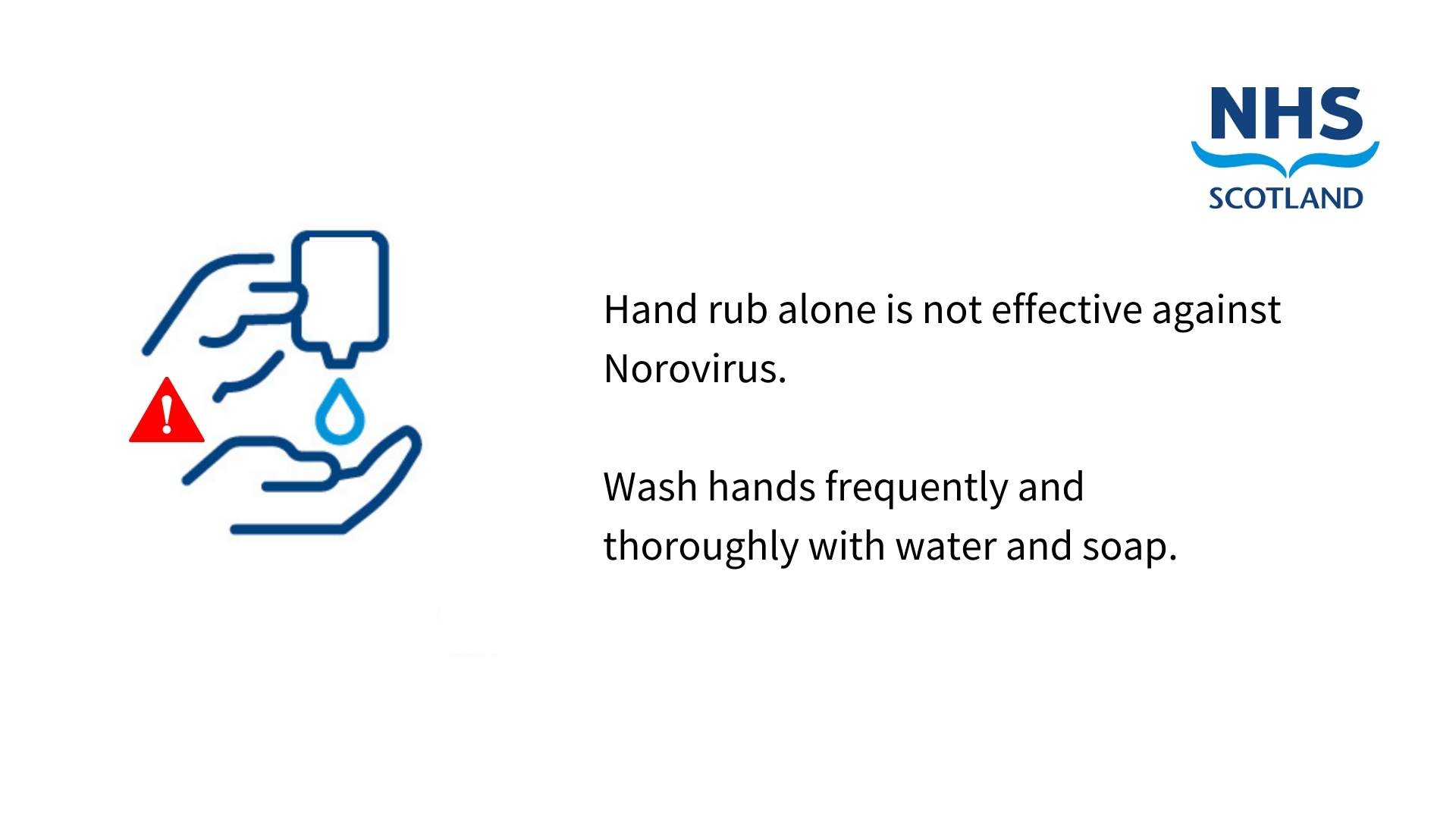
- Hand hygiene using soap and water should be used where a service user has symptoms of a gastro-intestinal infection (vomiting and/or diarrhoea).
- Remind visitors to use appropriate hand hygiene.
- Put up hand hygiene technique posters in areas where they are required for example hand rub dispensers at entrance to care area and above hand wash basins.
- Remind staff to undertake hand hygiene at the 5 moments or 4 moments in care homes.
- Make sure staff have access to appropriate training on hand hygiene
Respiratory and cough hygiene
- Staff should promote respiratory and cough hygiene helping those who need assistance with this, for example elderly and children.
- Provide service users with disposable tissues, plastic bags for used tissues and access to hand hygiene facilities as necessary.
- Encourage service users with symptoms of respiratory illness to wear a surgical (TYPE II R FRSM) face mask where it is clinically safe and tolerated by the wearer.
- Note: FRSM is not required when service user in their room on their own.
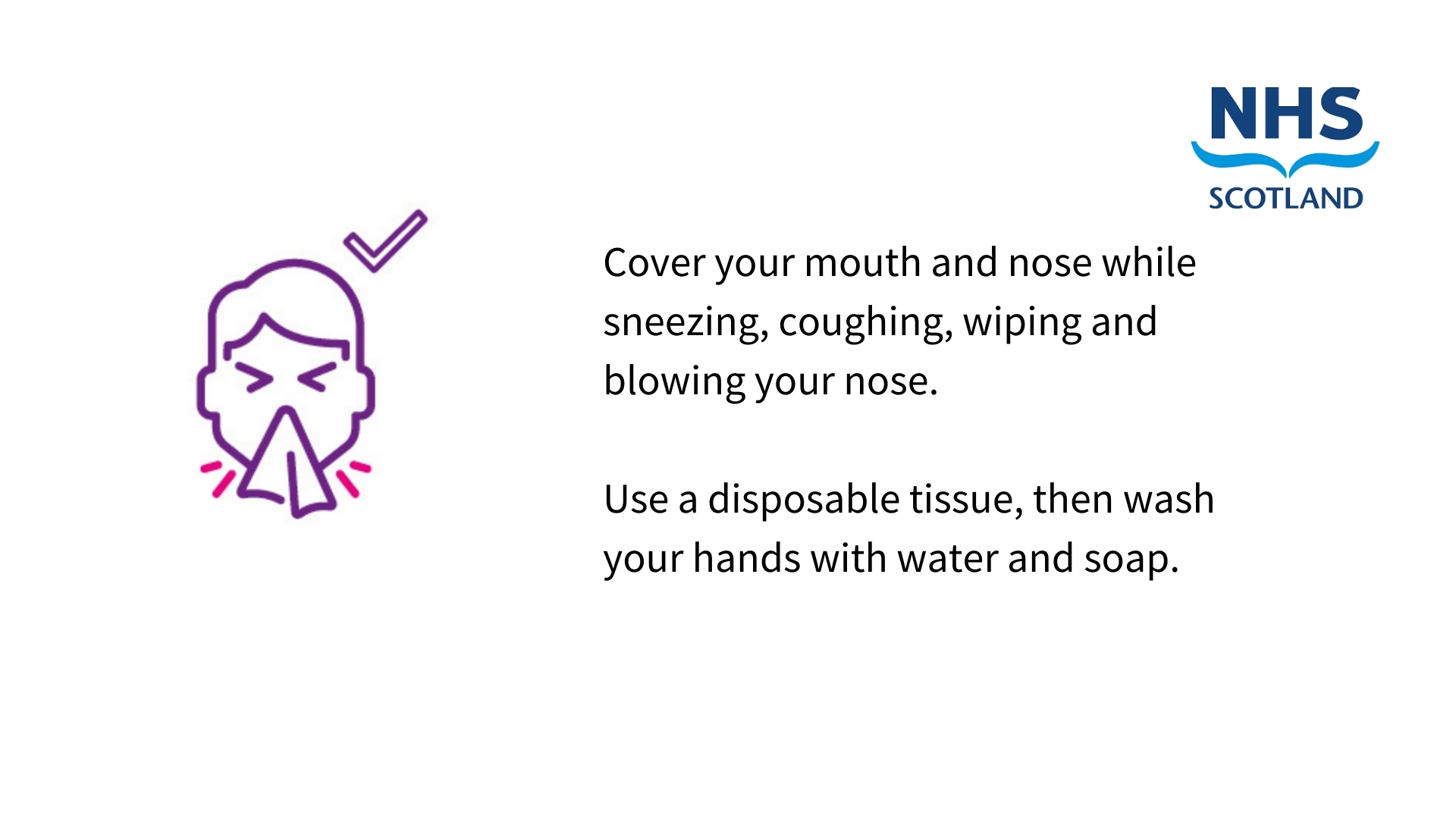
- Dispose of used tissues and face masks promptly into a waste bin.
- Wash hands with non-antimicrobial liquid soap and warm water after coughing, sneezing, using tissues, or after contact with respiratory secretions or objects contaminated by these secretions.
- Make sure staff have access to appropriate training on respiratory and cough hygiene.
Personal Protective Equipment (PPE)
- PPE is required to minimise the risk of cross-transmission of infection to yourself and others when providing care.
- PPE should be single-use items unless specified by the manufacturer whose decontamination procedures should be followed.
- Follow appropriate guidance for when and what PPE to wear when an infection is known or suspected.
- Make sure there is an adequate supply of all PPE that it is close to the point of use.
- Make sure staff have been fit tested before using RPE and know which make and model they have been fit tested for.
- Make sure staff perform a fit check every time they don a face filter piece 3 (FFP3) mask. Staff can access guidance on FFP3 masks in the NIPCM.
- PPE should be changed immediately after each service user and/or following completion of a procedure or task.
PPE should be disposed of after use into the correct waste stream which is healthcare waste or domestic waste.
Perform hand hygiene after removing PPE.
Advise visitors to wear PPE if they are performing direct care.
Make sure staff have access to appropriate training on PPE.
Care equipment and environment
- Make sure staff are aware of environmental and equipment cleaning schedules and know their specific responsibilities.
- Routine environmental cleaning should follow the guidance in the NHSScotland National Cleaning Specification and Cleaning Specification for Care Homes.
- Environmental and equipment decontamination may need to be increased when there is a known or suspected infection in the care area.
- There may be a need to update local cleaning schedules where increased frequency of environmental cleaning is required.
- If a patient or service user is suspected or known to have an infection, or where they are colonised with a transmissible pathogen, a Terminal clean of their room should be undertaken following transfer or discharge, or once the patient or service user is no longer considered infectious.
- Make sure staff have access to appropriate training on management of equipment and environment.